Promotion

Lesson 1: Introducing Your Family

我的家

Learn 是 + [N/pronoun] + 的 + N and 和 + S + 都 + V/Adj through Introducing Your Family.

7 words3 grammar points1 dialogues~12 min

Vocabulary7 words

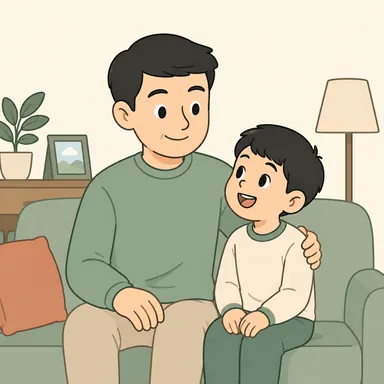
爸爸bàbaNoun
Illustration for 爸爸
  • dad, father

Examples

我爸爸是医生。

wǒbàbashìyīshēng。

My dad is a doctor.

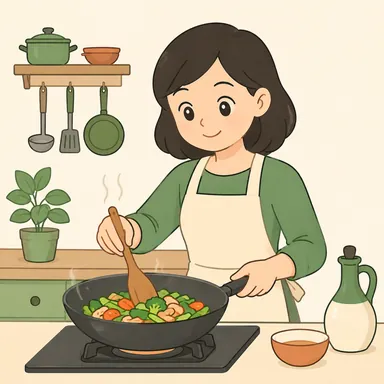
妈妈māmaNoun
Illustration for 妈妈
  • mom, mother

Examples

妈妈做饭很好吃。

māmazuòfànhěnhǎochī。

Mom cooks very delicious food.

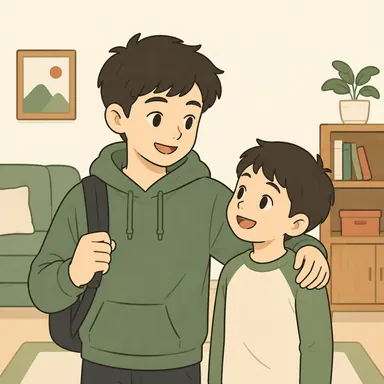
哥哥gēgeNoun
Illustration for 哥哥
  • older brother

Examples

我有一个哥哥。

wǒyǒuyígègēge。

I have an older brother.

姐姐jiějieNoun
Illustration for 姐姐
  • older sister

Examples

姐姐在北京工作。

jiějiezàiběijīnggōngzuò。

My older sister works in Beijing.

他tāPronoun
Illustration for 他
  • he, himthird person, male

Examples

他是我的朋友。

tāshìwǒdepéngyou。

He is my friend.

她tāPronoun
Illustration for 她
  • she, herthird person, female

Examples

她是我的妈妈。

tāshìwǒdemāma。

She is my mother.

对duìAdjective
Illustration for 对
  • 1.correct, right
  • 2.toward, with regard to
  • 3.to answer (a question) correctly
  • 4.pair (measure word)used to count things that come in pairs, e.g. 一对 (a pair)

Examples

你说得对。

nǐshuōdeduì。

You are right.

这件事对你很重要。

zhèjiànshìduìnǐhěnzhòngyào。

This matter is very important to you.

Grammar

Structure for showing possession or relationship

S + 是 + [N/代词] + 的 + N

Use '的' to show possession or a relationship. '的' attaches to the noun for the person or thing and comes before the main noun. For example, '爸爸的书' means 'dad's book'.

他是我的哥哥。

tāshìwǒdegēge。

He is my older brother.

她是我妈妈的朋友。

tāshìwǒmāmadepéngyou。

She is my mom's friend.

The structure 'and... both...'

S + 和 + S + 都 + V/Adj

Use '和' (and) to link two nouns, then use '都' (both/all) before the verb or adjective to show that both do the same thing or share the same characteristic.

爸爸和妈妈都爱我。

bàbahémāmadōuàiwǒ。

Both my dad and mom love me.

哥哥和姐姐都是学生。

gēgehéjiějiedōushìxuéshēng。

Both my older brother and older sister are students.

Nouns and pronouns as the subject

名词 / 代词 + 动词、形容词

The subject is a noun or pronoun placed at the START of the sentence, before the verb or adjective. Chinese verbs never change form, so position is the only marker.

我妈妈是老师。

wǒmāmashìlǎoshī。

My mother is a teacher.

他们都是学生。

tāmendōushìxuéshēng。

They are all students.

Dialogues

Introducing Your Family

Two friends look at photos and talk about each other's families.

小南
小南

这是谁?

zhèshìshéi?

Who is this?

小林
小林

他是我的爸爸。

tāshìwǒdebàba。

He is my dad.

小南
小南

她是你妈妈吗?

tāshìnǐmāmama?

Is she your mom?

小林
小林

对,她是我的妈妈。这是我哥哥和姐姐。

duì,tāshìwǒdemāma。zhèshìwǒgēgehéjiějie。

Yes, she is my mom. These are my older brother and older sister.

小南
小南

他们都是你的家人吗?

tāmendōushìnǐdejiārénma?

Are they all your family?

小林
小林

是的,他们都是我的家人。你的家人呢?

shìde,tāmendōushìwǒdejiārén。nǐdejiārénne?

Yes, they are all my family. How about your family?